How mentors shape Bar and Bat Mitzvah experiences

TL;DR:
A strong mentor transforms a Bar or Bat Mitzvah into a meaningful rite of passage.
Mentors teach rituals, public speaking, confidence, resilience, and personal values beyond Hebrew skills.
Supporting the mentorship journey with early planning, consistent practice, and meaningful conversations enhances lifelong Jewish identity.
Most families spend months obsessing over the guest list, the venue, and the catering. Yet the single most powerful factor in a meaningful Bar or Bat Mitzvah is rarely discussed at the planning table: the mentor. A skilled mentor transforms this milestone from a performance into a genuine rite of passage. They guide your child through Hebrew, prayer, and personal growth in ways that no party planner ever could. Understanding what mentors actually do, and how to support that relationship, is the most important preparation a parent can make.
Table of Contents
Key Takeaways
Point | Details |
Mentors guide more than rituals | Mentors support spiritual growth, public speaking confidence, and emotional well-being, not just ritual proficiency. |
Preparation lasts months | Mentorship spans 6–18 months with personalized lessons, skills assessment, and rehearsal milestones. |
Mentorship shapes values | A good mentor can instill discipline, foster Jewish identity, and help children form lasting community connections. |
Parental support is key | Parents should communicate with mentors, coordinate logistics, and create a positive learning environment. |
What mentors do: More than just teaching rituals
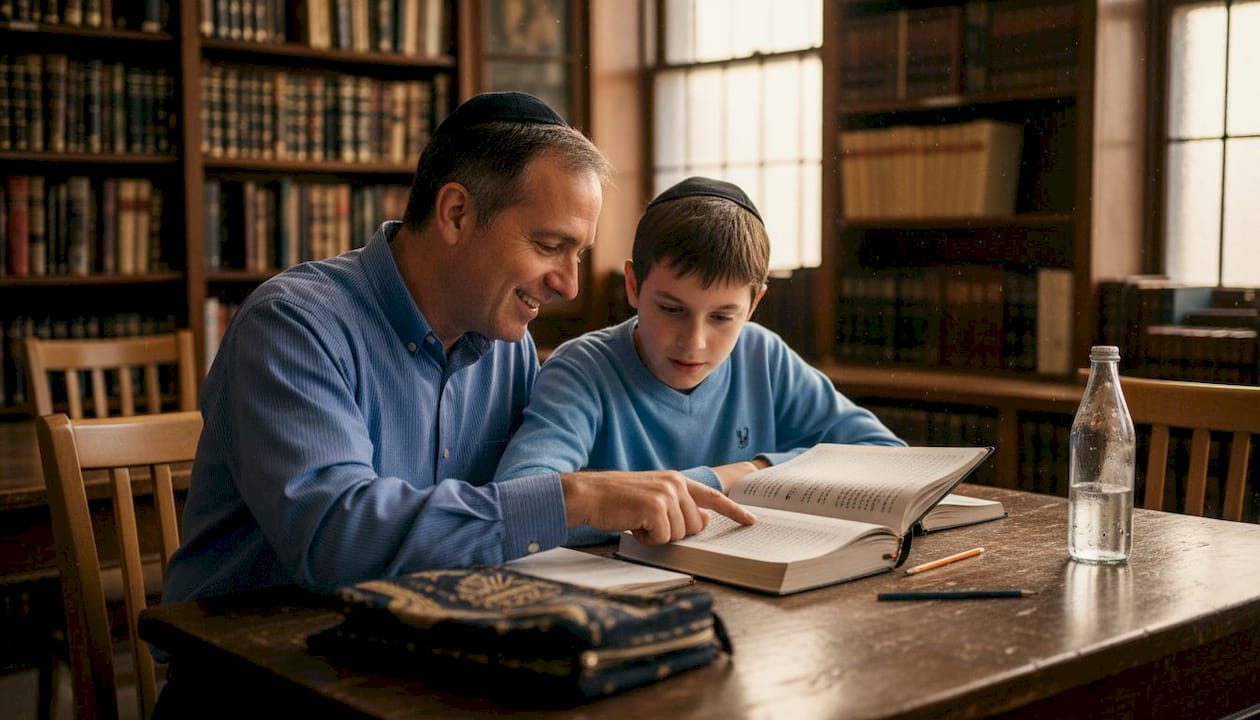
When most parents picture a Bar or Bat Mitzvah tutor, they imagine someone drilling Hebrew pronunciation at a kitchen table. That picture is incomplete. Mentors teach Torah reading, chants, prayers, and D’var Torah delivery, but their role reaches far beyond those technical skills. They are part teacher, part coach, and part trusted adult guide.
Here is what a mentor typically covers during the preparation process:
Torah portion study: Learning to chant the assigned parashah (weekly Torah portion) with correct trope, the traditional melody system used in Jewish liturgy.
Prayer leadership: Understanding the structure of the Shabbat service and confidently leading key prayers in front of a congregation.
D’var Torah writing: Crafting and delivering a personal speech that connects the Torah portion to the student’s own life and values.
Hebrew fluency: Building enough reading and comprehension skills to navigate the service with confidence.
Public speaking coaching: Projecting voice, maintaining eye contact, and managing nerves in front of a large audience.
That last point matters more than most parents realize. Standing at a bimah (the raised platform in a synagogue where the Torah is read) in front of 150 people is genuinely intimidating for a 13-year-old. Mentors who offer mitzvah planning guidance understand that managing anxiety is just as important as mastering the text.
Statistic to know: Studies on adolescent public speaking show that structured mentorship significantly reduces performance anxiety in young teens, making the ceremony a moment of pride rather than dread.
The best mentors build a relationship where the child feels safe to make mistakes, ask questions, and grow. That psychological safety is what makes everything else possible.
The mentorship journey: Typical timelines and touchpoints
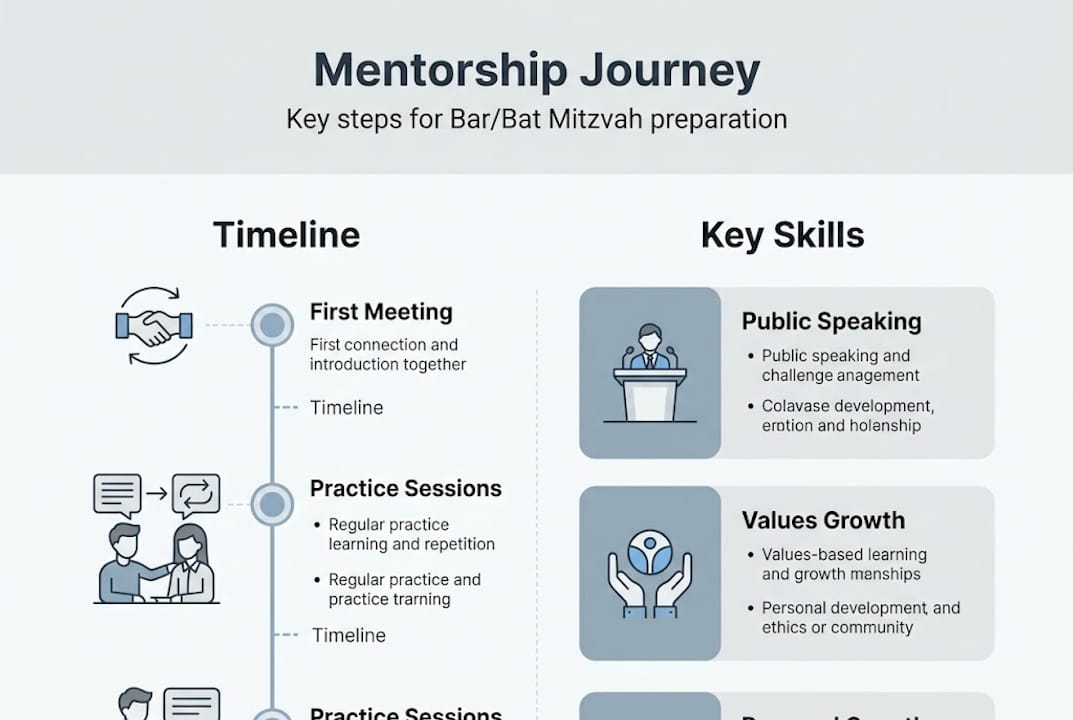
Knowing what mentors do is one thing. Understanding when everything happens helps parents plan with far less stress. Mentorship typically spans 6 to 12 months of private tutoring, building on the foundation your child already has from religious school.
Here is a general timeline most families follow:
Phase | Timeframe | Focus |
Assessment | Month 1 | Hebrew level, learning style, Torah portion assignment |
Foundation | Months 2 to 4 | Hebrew reading fluency, basic trope patterns |
Deep study | Months 5 to 8 | Full Torah portion, haftarah (prophetic reading), prayer leading |
D’var Torah | Months 8 to 10 | Writing and refining the personal speech |
Rehearsal | Final 2 months | Full run-throughs, public speaking polish, anxiety management |
Key milestones to watch for:
First skills assessment: Sets the baseline and shapes the entire learning plan.
Practice Shabbat: A low-stakes rehearsal in front of family or a small group.
Full dress rehearsal: Often held at the synagogue one or two weeks before the ceremony.
The ceremony itself: The culmination of months of real work and growth.
Pro Tip: Build buffer time into your schedule. Life happens, kids get sick, and holidays interrupt tutoring sessions. Starting the step-by-step mitzvah guide process a month earlier than you think you need to will save enormous stress later.
Setbacks are normal and even healthy. A child who struggles with a difficult passage and then masters it builds far more confidence than one who coasts through easy material.
Beyond the ceremony: Building life skills, values, and identity
The ceremony lasts about two hours. The skills and values built during mentorship last a lifetime. Mentors facilitate personal theology development and growth through non-family guidance, teaching discipline and anxiety management in ways that parents simply cannot replicate.
There is something uniquely powerful about a trusted adult outside the family who believes in your child. That relationship creates a safe space for honest conversations about faith, identity, and what it means to become a Jewish adult.
“The mentor relationship is often the first time a young person articulates their own spiritual beliefs out loud to someone who listens without judgment.”
Here is what children consistently gain from strong mentorship:
Self-discipline: Showing up to weekly sessions, practicing daily, and meeting deadlines builds habits that transfer to school and life.
Resilience: Learning to recover from mistakes in a low-stakes environment prepares kids for real-world challenges.
Community identity: Mentors connect students to the broader Jewish community, making them feel part of something larger than themselves.
Public confidence: The ability to stand and speak before a crowd is a skill that serves students in every area of life.
Families also benefit directly. A meaningful mitzvah itinerary built around genuine spiritual growth creates shared memories that bind families together. Parents who engage with the mentorship process often report reconnecting with their own Jewish identity alongside their child.

Practical tips for supporting your child’s mentorship journey
Preparation typically spans 12 to 18 months, with tutoring costs ranging from synagogue-covered to privately arranged. Knowing this upfront helps families plan both financially and logistically.
Here is how to make the most of the mentorship relationship:
Choose the right mentor. Look beyond credentials. Ask how the mentor handles frustration, communicates with parents, and adapts to different learning styles. A great tutor for one child may be completely wrong for another.
Create a consistent practice environment. Set a dedicated time and space at home for daily review. Even 15 minutes a day compounds dramatically over 12 months.
Stay involved without hovering. Ask your child open-ended questions after sessions. Avoid quizzing or pressuring. Your job is to be curious, not evaluative.
Coordinate logistics early. Schedule conflicts are the number one reason mentorship sessions get skipped. Book mitzvah travel accommodation and family events well in advance so they do not compete with critical preparation periods.
Talk about the meaning, not just the mechanics. Ask your child what their Torah portion means to them personally. These conversations deepen the experience far beyond what any tutor can do alone.
Pro Tip: If you are planning a destination celebration, arrange family activities that reinforce the themes your child is studying. A trip that connects the Torah portion to real places and real history creates an experience no classroom can match.
A modern take: The real impact of mentorship in today’s Jewish lifecycle events
Here is something we have seen repeatedly over 20 years of working with Bar and Bat Mitzvah families: the most memorable ceremonies are almost never the most elaborate ones. They are the ones where a child clearly means what they are saying.
That depth of meaning comes from mentorship. It cannot be purchased, scheduled last-minute, or outsourced to a checklist. In an era of social media highlight reels and party competition, the mentor relationship is the quiet anchor that keeps the whole experience honest. Families who coordinate travel logistics around the spiritual journey rather than the other way around consistently report that their children carry the experience forward into adulthood. The ceremony ends. The identity it builds does not.
Plan a meaningful Bar or Bat Mitzvah experience
For families ready to take the mentorship journey to the next level, a destination celebration in Israel offers something extraordinary. Imagine your child chanting Torah at the Western Wall or the shores of the Kinneret, in the very land where these stories were born.
At Bnei Mitzvah, our Israel Bar/Bat Mitzvah tours are designed to deepen everything your child’s mentor has been building. We handle every detail of Bar Mitzvah tour options so your family can focus on what matters most. Visit Bnei Mitzvah trip planning to start designing an experience your family will talk about for generations.
Frequently asked questions
How do I choose the right Bar/Bat Mitzvah mentor for my child?
Look for a mentor whose teaching style matches your child’s learning needs and whose values align with your family’s approach to Judaism. Mentors guide students in personal development and public speaking, not just Torah, so personality fit matters as much as credentials.
How long does Bar/Bat Mitzvah mentorship typically last?
Most mentorships run between 6 and 18 months, with regular sessions and structured milestones along the way. Preparation spans 12 to 18 months on average, though children with stronger Hebrew backgrounds may need less time.
Is mentorship mainly about learning rituals?
Not at all. While rituals are part of the work, mentorship also builds self-discipline, confidence, and a lasting sense of Jewish identity that carries well beyond the ceremony. Mentorship instills lifelong skills and community connection that no single event can provide.
Are there extra costs for Bar/Bat Mitzvah mentors?
It depends on your synagogue. Tutors may be synagogue-covered or private, with fees varying widely based on location, experience, and session frequency. Always clarify this with your rabbi or synagogue administrator early in the planning process.
How can parents best support the mentorship process?
Stay engaged, keep communication open between your child and their mentor, and protect tutoring sessions from scheduling conflicts. Parents play a key support role by encouraging daily practice and making space for meaningful conversations about the Torah portion and its personal relevance.
Recommended
Comments