Israel heritage sites explained for Bar and Bat Mitzvah trips

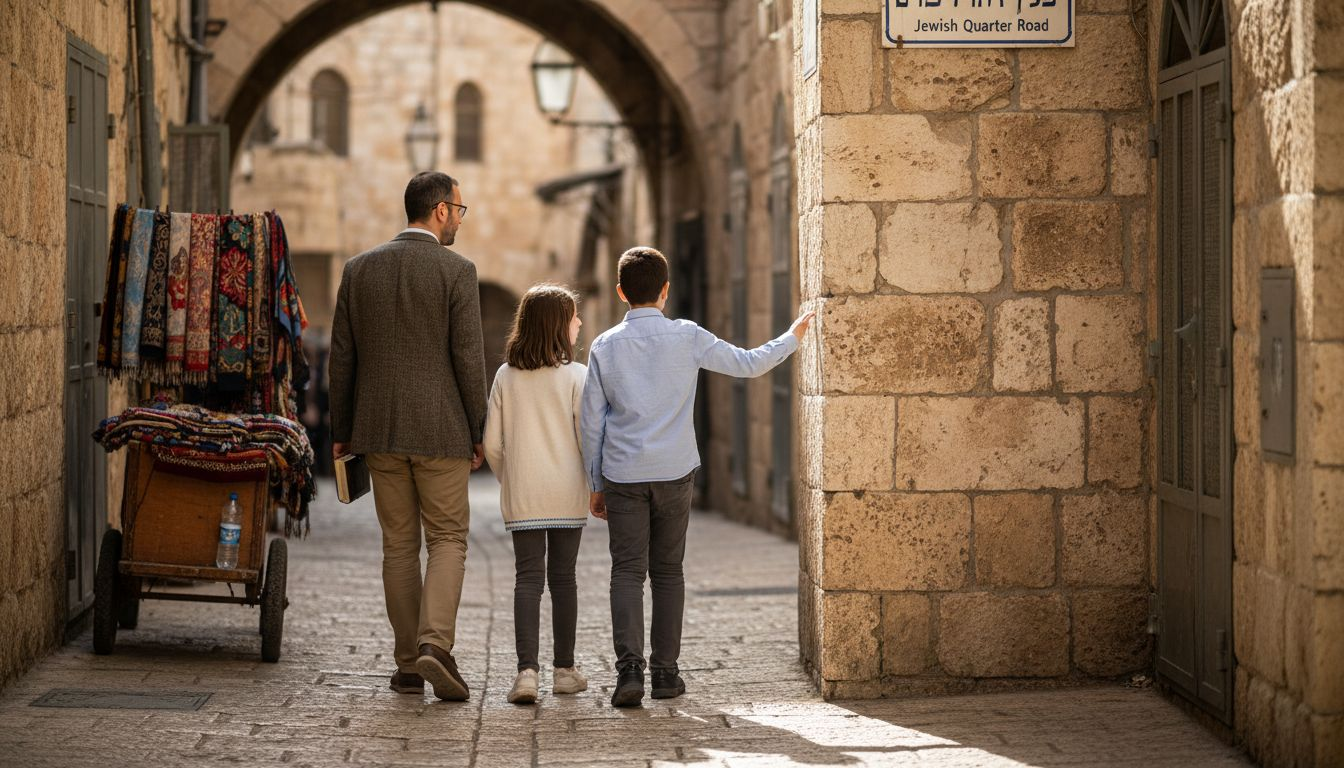
Many families visit Jerusalem without realizing they’re walking through the spiritual heart of Jewish identity, a city mentioned 669 times in the Hebrew Bible and woven into daily prayers worldwide. This article explains Israel’s most significant heritage sites, focusing on Jerusalem and Yad Vashem, to help you plan a Bar or Bat Mitzvah trip that connects your family to thousands of years of history, faith, and resilience in deeply meaningful ways.
Table of Contents
Key takeaways
Point | Details |
Jerusalem’s spiritual centrality | The city appears in 669 biblical references and remains the focus of Jewish prayers and yearning. |
Second Temple period legacy | Pilgrimage festivals connected diaspora Jews to Jerusalem’s religious and administrative center. |
Yad Vashem’s comprehensive memorial | The museum holds over 227 million pages of documentation and honors millions through the Book of Names. |
Meaningful family bonding | Visiting heritage sites during Bar and Bat Mitzvah trips deepens Jewish identity and creates lasting memories. |
Expert planning enhances experiences | Professional tour guidance ensures smooth, educational, and spiritually uplifting journeys through Israel’s heritage. |
Jerusalem’s central role in Jewish heritage
Jerusalem isn’t just another destination on your itinerary. It’s the beating heart of Jewish spiritual life, referenced in scripture, liturgy, and daily prayers for millennia. The city’s significance goes far beyond tourism, offering Bar and Bat Mitzvah families a chance to stand where ancestors prayed, kings ruled, and prophets taught.
King David’s emotional connection to Jerusalem shaped Jewish cultural expressions for generations. Many of his yearnings became the foundation for popular prayers and songs still sung today. When your family visits the City of David or prays at the Western Wall, you’re connecting to this unbroken chain of devotion stretching back 3,000 years.
The spiritual weight of Jerusalem becomes tangible when you explore its ancient streets and sacred sites. Consider these dimensions of Jerusalem’s significance:
The Western Wall represents the last remnant of the Second Temple complex
Mount Zion symbolizes Jewish longing for return and redemption
The Old City quarters preserve centuries of Jewish life and scholarship
Archaeological sites reveal continuous Jewish presence through changing empires
Pro Tip: Visit Jerusalem early in your trip so the historical context enriches your understanding of other Israeli heritage sites you’ll encounter later.
“If I forget you, O Jerusalem, let my right hand forget its skill.” This psalm verse captures the depth of Jewish attachment to the city, recited at weddings and moments of celebration to honor Jerusalem even in joy.
For Bar and Bat Mitzvah families, walking through Jerusalem means experiencing 6 attractions in Jerusalem that bring scripture and history to life. Your child’s coming of age ceremony gains profound meaning when celebrated in the same city where Jewish identity was forged through triumph and tragedy across centuries.
Planning a Jerusalem Bar Mitzvah trip requires understanding this layered significance. You’re not just sightseeing but embarking on a spiritual journey that connects your family’s story to the larger narrative of Jewish survival and faith.
Historical impact of the Second Temple period in Jerusalem
The Second Temple period transformed Jerusalem into Judaism’s undisputed center, creating patterns of worship and pilgrimage that define Jewish practice today. Understanding this era helps families appreciate why archaeological sites and ancient pathways still resonate with spiritual energy.
During this time, Jews worldwide prayed toward Jerusalem and made pilgrimage three times yearly for major festivals. These massive gatherings created economic, social, and religious networks spanning the known world. Imagine the energy when hundreds of thousands converged on the Temple Mount for Passover, Shavuot, and Sukkot.
The political landscape shaped Jerusalem’s development significantly. Royal capitals and national institutions were centralized under Hasmonean and Herodian rule, making the city both spiritual heart and administrative center. This dual role amplified Jerusalem’s importance beyond religious observance alone.
Key features of Second Temple period Jerusalem included:
Elaborate temple rituals performed by hereditary priesthood
Pilgrimage routes still visible in archaeological excavations today
Social hierarchies influencing religious access and practice
Herod’s massive construction projects expanding the Temple Mount
Schools of thought like Pharisees and Sadducees debating in temple courts
Aspect | Second Temple Era Impact |
Religious centrality | Temple worship unified diverse Jewish communities |
Economic influence | Pilgrimage created major commerce and hospitality industries |
Political significance | Jerusalem served as capital under multiple ruling dynasties |
Social structure | Priestly classes and merchant guilds shaped city life |
Pro Tip: When visiting the Southern Wall excavations, look for the ritual baths where pilgrims purified themselves before entering the Temple Mount, a tangible connection to ancient worship practices.
This historical framework enriches visits to Jewish heritage sites throughout Jerusalem. When your family walks the ancient stones, you’re literally following paths trod by ancestors who came for festivals, offerings, and spiritual renewal. The best Bar Mitzvah locations incorporate this historical depth, helping children understand their place in Jewish continuity.
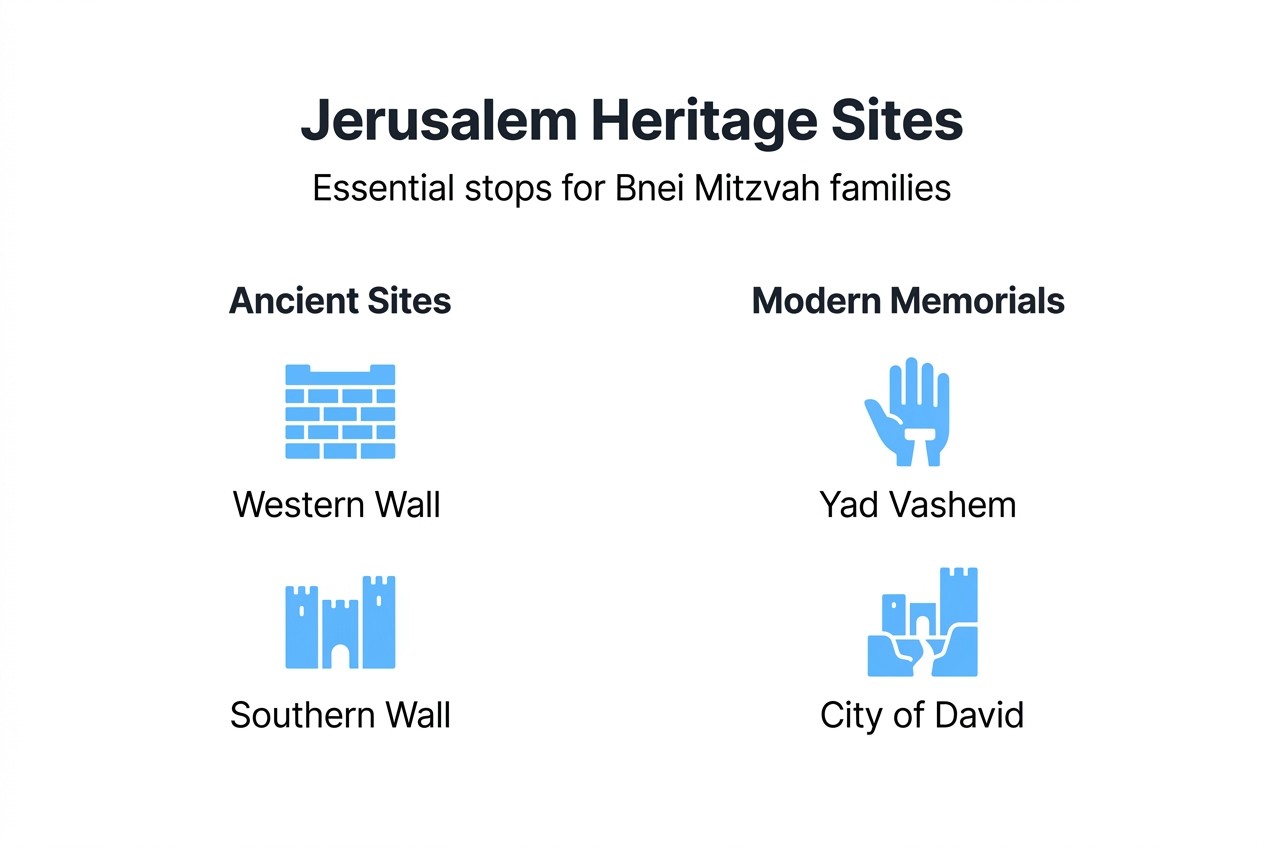
The Second Temple period ended tragically in 70 CE, but its legacy persists in Jewish liturgy, calendar, and collective memory. Archaeological discoveries continue revealing how Jews lived, worshiped, and organized society during this formative era.
Yad Vashem: memorializing the Holocaust with profound significance
Yad Vashem stands as the world’s most comprehensive Holocaust memorial, preserving memory through millions of artifacts, testimonies, and educational resources. For Bar and Bat Mitzvah families, visiting this site creates an emotional bridge between celebration and remembrance, honoring those who never had the chance to see their children reach this milestone.
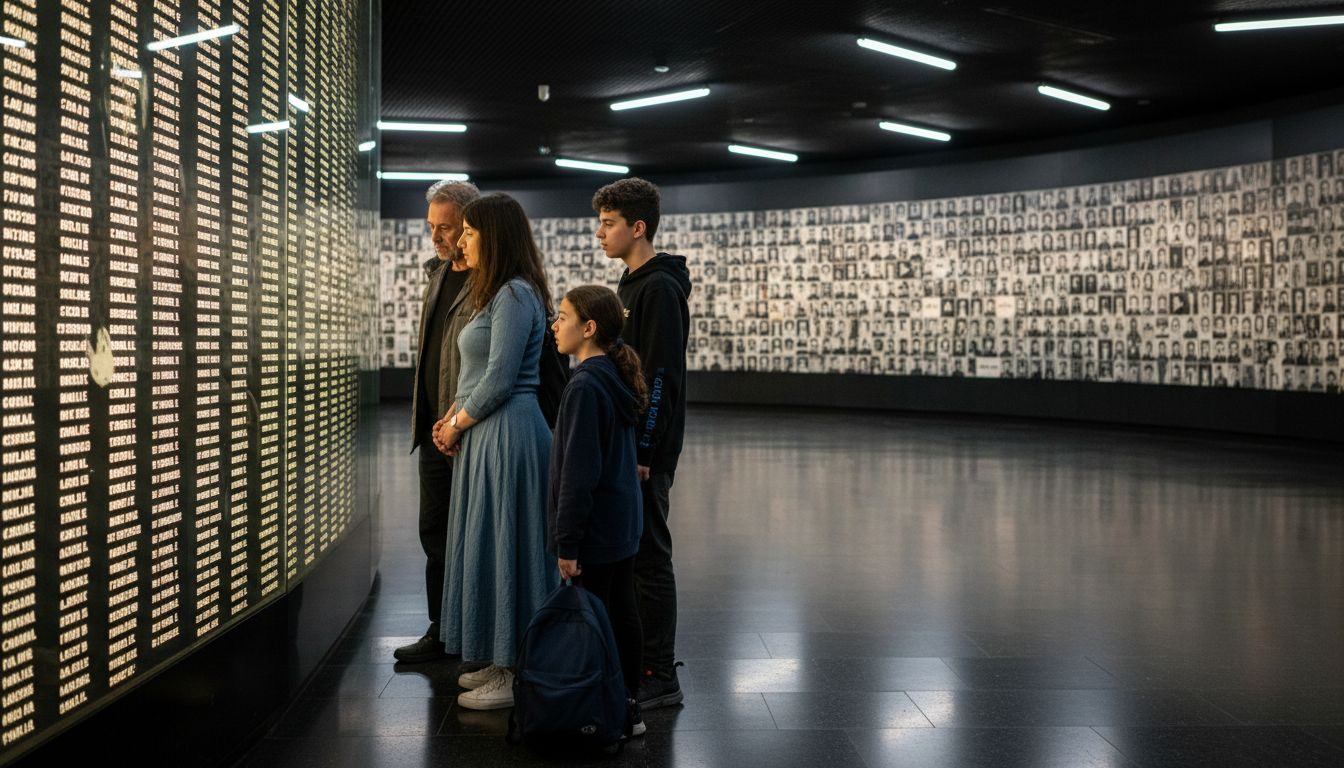
The museum’s collection is staggering in scope: over 227 million pages of documentation, 40,000 artifacts, 14,000 works of art, and more than 100,000 survivor testimonies. Each item represents individual lives, families, and communities destroyed by hatred, making the Holocaust’s enormity comprehensible through personal stories.
The Book of Names memorializes over 4.8 million victims, a monument to systematic documentation ensuring no one is forgotten. Reading names aloud has become a powerful ritual for visiting families, acknowledging each person’s humanity and unrealized potential.
Memorial Feature | Significance |
Holocaust History Museum | Uniquely Jewish perspective engaging visitors with survivors’ lived experiences |
Hall of Names | Circular room housing photographs and testimony pages of victims |
Children’s Memorial | Darkened space with candles reflecting infinitely, representing 1.5 million murdered children |
Valley of Communities | Stone monument carved with names of destroyed Jewish communities |
The emotional weight of Yad Vashem requires preparation. Consider these aspects when planning your visit:
Allow sufficient time for reflection without rushing through exhibits
Prepare children age appropriately for confronting difficult historical realities
Plan quiet discussion time afterward to process emotions together
Connect the visit to Jewish resilience and the miracle of Israel’s existence
Consider attending a ceremony if your timing allows
Pro Tip: Visit Yad Vashem on a weekday morning to avoid crowds and allow for more contemplative engagement with exhibits and memorials.
The meaning of Israeli landmarks takes on special depth at Yad Vashem. Your Bar or Bat Mitzvah celebration gains perspective when juxtaposed with remembrance of those who perished. This creates space for gratitude, responsibility, and commitment to Jewish continuity.
Many families incorporate memorial prayers or symbolic acts during their Yad Vashem visit. Lighting candles, saying Kaddish, or reading victim names personalizes the experience beyond passive observation. These rituals help children understand their role as memory keepers for future generations.
Integrating Yad Vashem into Bar Mitzvah in Israel ideas balances joy with solemnity, teaching that Jewish identity encompasses both celebration and responsibility. The museum’s educational programs offer age appropriate ways to engage with Holocaust history meaningfully.
Planning meaningful Bar and Bat Mitzvah trips around heritage sites
Creating an itinerary that maximizes heritage site impact requires thoughtful planning aligned with your family’s values and educational goals. The right balance transforms tourism into pilgrimage, making every stop contribute to your child’s Jewish identity formation.
Start by identifying which aspects of Jewish heritage resonate most with your family:
Biblical history and archaeological sites
Modern Israeli achievements and innovation
Holocaust remembrance and resilience
Spiritual practices and religious observance
Cultural traditions and artistic expressions
Your priorities will shape which sites receive extended time versus brief visits. A family passionate about archaeology might spend hours at City of David excavations, while those focused on spirituality may prioritize prayer experiences at sacred locations.
Balancing Jerusalem’s ancient sites with Yad Vashem’s modern memorial creates emotional and intellectual richness. Consider this sequence:
Morning visits to active archaeological sites when energy is high
Afternoon tours of museums and indoor exhibits during peak heat
Evening reflection time for family discussions about day’s experiences
Shabbat observance incorporating newly learned historical context
Pro Tip: Schedule demanding emotional experiences like Yad Vashem for mid trip when you’ve already bonded as a family but still have days afterward to process and discuss what you’ve learned.
Guided tours add immeasurable value through expert historical context and answers to spontaneous questions. Professional guides connect disparate sites into coherent narratives, helping children see patterns across Jewish history. They also navigate logistics, allowing you to focus on experience rather than directions.
Incorporate moments specifically meaningful for the Bar or Bat Mitzvah child:
Reading Torah portions at the Western Wall
Leading prayers at locations mentioned in their haftarah
Creating personal rituals at memorial sites
Journaling reflections to share during the ceremony
Collecting stones or artifacts (where permitted) as physical memories
Leveraging planned Bar/Bat Mitzvah tours ensures professional coordination of complex logistics. Expert planners know optimal timing, crowd patterns, and how to access special programs unavailable to independent travelers. They’ve refined itineraries through years of experience, avoiding common pitfalls.
Customization matters enormously. Cookie cutter tours miss opportunities to align experiences with your specific family dynamics, interests, and observance level. Quality Bar/Bat Mitzvah trip planning involves consultation to understand what will make this journey uniquely meaningful for you.
Build in flexibility for spontaneous moments. Some of the most powerful experiences happen when you linger at an unexpected site or engage in unplanned conversations with locals. Rigid schedules can prevent these organic connections from developing naturally.
Plan your meaningful Bar and Bat Mitzvah trip with Bnei Mitzvah
Transforming Israel heritage site knowledge into actual travel plans requires expertise in both Jewish education and tour logistics. That’s where professional planning makes the difference between a good trip and an unforgettable journey.
Bnei Mitzvah specializes in creating planned Bar/Bat Mitzvah tours that weave together Jerusalem’s ancient sites, Yad Vashem’s memorial experience, and modern Israeli culture into cohesive family adventures. With over 20 years of expertise in tourism and event planning, we’ve perfected the balance between education, spirituality, and celebration.
Our planned Bar Mitzvah tour packages include expert guides who bring history alive through storytelling, ensuring children engage actively rather than passively observing. We handle accommodation, transportation, kosher dining, and special access to sites, letting your family focus entirely on meaning and connection.
Explore our comprehensive Bar/Bat Mitzvah trip planning resources to discover how we customize experiences around your family’s unique interests and needs. Every detail is designed to create the meaningful, joyful celebration your child deserves at this pivotal moment in their Jewish journey.
Frequently asked questions about Israel heritage sites
How does visiting Jerusalem enhance a Bar or Bat Mitzvah experience?
Jerusalem provides physical context for biblical stories and prayers your child has studied, making abstract concepts tangible and real. Standing at the Western Wall or walking ancient streets creates emotional connections that last a lifetime. The city’s layers of history teach resilience and continuity, showing how Jewish identity survived through changing circumstances across millennia.
What makes Yad Vashem a crucial stop on Bar/Bat Mitzvah trips?
Yad Vashem teaches that Jewish identity includes responsibility to remember and prevent future atrocities, not just celebrate joyful milestones. The museum’s comprehensive documentation ensures the Holocaust remains real and personal rather than abstract history. For children becoming adults in Jewish community, understanding this tragedy and the resilience that followed shapes mature, committed identity.
How can families prepare spiritually and educationally for visiting these heritage sites?
Study relevant biblical passages, historical periods, and family genealogy before departing to create frameworks for understanding. Discuss what questions your child has about Jewish history, identity, and Israel’s significance. Consider reading survivor memoirs or watching documentaries about Jewish heritage sites to build context. Create family rituals like special prayers or journaling to mark meaningful moments during the trip.
What age is ideal for children to appreciate heritage site visits on Bar/Bat Mitzvah tours?
Twelve to thirteen years old, the traditional Bar and Bat Mitzvah age, offers the cognitive maturity to grasp complex historical and ethical concepts while remaining emotionally open to spiritual experiences. Children this age can engage with difficult Holocaust history appropriately and appreciate the privilege of visiting Israel. Younger siblings benefit from exposure but may need simplified explanations and shorter visit durations.
How can families make their visit to Yad Vashem meaningful?
Plan guided tours focused on survivor stories and historical facts to provide structure and expert interpretation of exhibits. Allow quiet time for reflection and discussion among family members afterward to process emotions together. Consider incorporating memorial prayers or symbolic acts like lighting candles to personalize the experience. Connect the visit to broader themes of Jewish resilience and your family’s own meaning of Israeli landmarks understanding.
What should Bar and Bat Mitzvah families know about the Second Temple period?
The Second Temple period shaped Jerusalem’s religious and social centrality for Jews worldwide through pilgrimage festivals and temple worship. This era created patterns of Jewish practice still followed today, including prayer toward Jerusalem and festival observances. Understanding this historical foundation shows why Jerusalem holds such profound spiritual importance and helps contextualize archaeological sites you’ll visit. Learning about Jewish heritage sites from this period enriches appreciation for Jewish continuity.
How do guided tours help Bar and Bat Mitzvah families connect with heritage sites?
Guides provide historical context and answer questions onsite, transforming ruins and artifacts into vivid stories about real people and events. They help personalize experiences by connecting the heritage to each family’s story and interests. Professional guides know how to engage children at appropriate levels, making complex history accessible and interesting. Quality Bar/Bat Mitzvah trip planning includes expert guides who create memorable, educational experiences tailored to your family’s needs.
Recommended
Comments