Israel Intergenerational Travel: Family Guide 2026
- שי דוד

- Jun 1
- 7 min read
TL;DR:
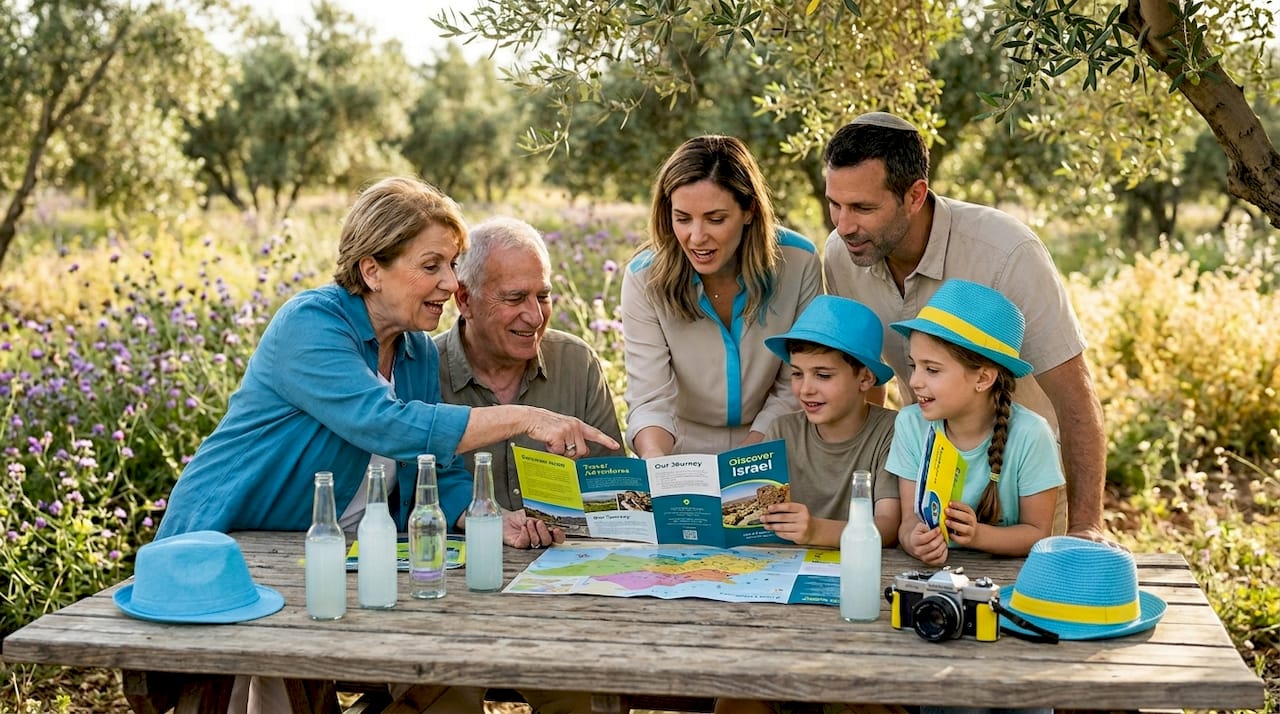
Intergenerational travel to Israel involves family members across multiple generations sharing cultural and educational experiences. Proper planning, emotional preparation, and activity selection unlock meaningful family connections that create lasting memories. Well-organized trips focus on accessibility, storytelling, and timing around festivals to foster deep heritage understanding and transformation.
Intergenerational travel to Israel is the intentional journey of multiple family generations sharing cultural, historical, and educational experiences that build lasting heritage connections. Explaining Israel intergenerational travel to your family means more than booking flights. It means designing a trip where a six-year-old, a teenager, and a grandparent all leave changed. Israel delivers this at a density few destinations match, combining UNESCO heritage sites, living Jewish tradition, and multi-generational family activities within a single itinerary.
What is intergenerational travel to Israel?
Intergenerational travel, the recognized term in family tourism research, describes trips where three or more generations travel together with shared educational or cultural goals. In the Israel context, this means grandparents transmitting lived memory, parents providing context, and children absorbing identity. Multi-generational travel deepens family bonds and cultural identity by creating shared memories across different life stages, which makes heritage continuity a measurable outcome rather than a vague aspiration. The National Library of Israel, Nahal Me’arot, and the Western Galilee region each offer structured programming that serves this goal directly.
What cultural and educational experiences suit all ages in Israel?
The strongest intergenerational itineraries combine physical accessibility, emotional resonance, and age-appropriate learning. Three categories consistently deliver across generations.
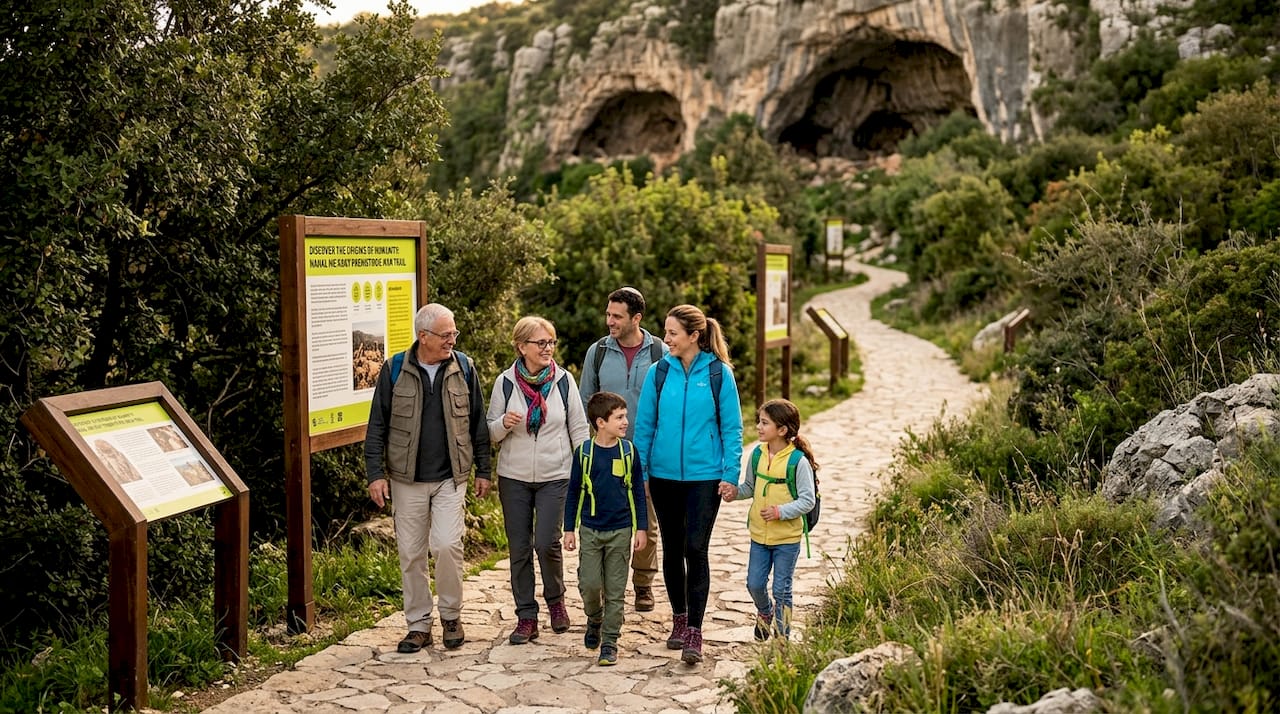
Heritage sites with built-in storytelling. The Prehistoric Man Trail at Nahal Me’arot is a UNESCO World Heritage site featuring a 1 to 1.5 hour easy trail with life-size statues, audiovisual presentations, and rest spots. Entry runs approximately 28 ILS per adult. Children engage with the interactive exhibits while grandparents appreciate the historical depth. Interactive exhibits at heritage sites make complex history accessible to children, transforming visits into shared family learning experiences.
Nature and cultural immersion programs. The Western Galilee Katuptot program runs from 9:30 am to 2 pm and includes a nature walk, foraging, and lunch in a Bedouin hospitality complex. Pricing is 150 NIS per adult and 100 NIS per child, with onsite parking and accessible facilities. This format works because it layers sensory experience with cultural education, giving every age group something concrete to engage with.
Live cultural programming. The National Library of Israel offers concerts, workshops, and family events, with some tickets priced as low as 30 NIS. These programs are scheduled in advance, which makes itinerary planning straightforward.
Activity | Best ages | Approx. cost | Duration |
Nahal Me’arot Prehistoric Trail | All ages | 28 ILS/adult | 1 to 1.5 hours |
Katuptot Western Galilee program | All ages | 150 NIS/adult, 100 NIS/child | 9:30 am to 2 pm |
National Library cultural events | All ages | From 30 NIS | 1 to 2 hours |
Israel Independence Day site visits | All ages | Free | Half day |
Balanced itineraries combining cultural festivals, nature hikes, and heritage sites produce the strongest cross-generational engagement because variety prevents fatigue and sustains curiosity across different attention spans.
What logistics do families need to plan for Israel in 2026?
Smooth intergenerational trips to Israel require documentation discipline above everything else. Here is what to address before you book anything else.
Secure ETA-IL for every traveler. As of 2026, every traveler to Israel requires a valid ETA-IL authorization before boarding, including infants. The authorization costs 25 ILS, processes within 24 to 72 hours, and is valid for two years or until passport expiry. Airlines enforce this at check-in without exception.
Assign one adult as the documentation lead. Assigning one adult to track ETA-IL applications for all travelers reduces the risk of denied boarding, particularly for infants and minors who require individual approvals. This single step prevents the most common family travel failure point.
Choose accommodation with mixed-age needs in mind. Ground-floor or elevator-accessible rooms matter for grandparents. Proximity to major sites reduces transit fatigue for young children. Hotels in Tel Aviv, Jerusalem, and Haifa each offer different access advantages depending on your itinerary focus.
Pace the itinerary deliberately. A maximum of two major sites per day works for groups that include children under ten or adults over seventy. Build in midday rest blocks, especially during summer months when temperatures exceed 35°C.
Pack for emotional contingencies. Visits to sites with historical weight require preparation beyond sunscreen and snacks. Bring journals, drawing materials, or age-appropriate books that children can use to process what they see.
Pro Tip: Book ETA-IL applications for all family members on the same day and save confirmation numbers in a shared document. A missed infant ETA-IL is the single most common reason families miss flights to Israel.
How do you prepare children emotionally for Israel’s history?
Preparing children for Israel travel is not optional. It is the difference between a trip that confuses and one that transforms. The emotional preparation for children visiting historic trauma sites requires storytelling, contextualization, and reassurance to build resilience and understanding rather than anxiety.
Start the conversation at home, weeks before departure. Use age-appropriate books, documentaries, and family stories to build a framework. Children who arrive with context ask better questions and absorb more. They also handle difficult moments with more stability.
On the ground, use these communication practices:
Before each site visit, explain in one or two sentences what the place represents and why your family is going there.
During the visit, invite children to notice details rather than absorb lectures. “What do you see?” works better than “This is important because…”
After each visit, give children unstructured time to draw, write, or simply talk. Reflection cements experience.
Acknowledge difficult emotions directly. If a child feels sad or confused at a memorial site, name that as a normal and appropriate response.
Connect history to family narrative. Grandparents sharing personal or family stories at relevant sites create the most lasting impressions.
Pro Tip: Carry a small travel journal for each child. Ask them to write or draw one thing they want to remember from each day. By the end of the trip, this becomes a family artifact with real emotional value.
Families who prepare psychologically before visiting sites of historical significance report that children engage more deeply and ask more meaningful questions throughout the trip.
What special events can enhance your Israel family trip?
Timing your trip around Israeli public events multiplies the cultural value of every day. Israel’s Independence Day is the clearest example. The Israel Nature and Parks Authority coordinates free access to heritage sites on Independence Day, with family-friendly guided tours, craft workshops, and pioneer-themed activities that engage every age group simultaneously.
Key planning points for event-based travel:
Check the Hebrew calendar before booking. Major holidays like Passover, Shavuot, and Sukkot each generate public programming at heritage sites, museums, and cultural centers.
Register for workshops in advance. Free events at popular sites fill quickly. The National Library of Israel and the Israel Museum both require advance registration for family programs.
Use free access days strategically. Sites that normally charge admission often offer free or reduced entry during national holidays. This is the best time to visit higher-cost venues with large family groups.
Plan around Shabbat logistics. Public transportation stops on Shabbat in most Israeli cities. Families with young children or elderly members should arrange private transport or stay within walking distance of planned activities on Friday evenings and Saturdays.
The Israel educational sites guide for Bar and Bat Mitzvah trips from Bneimitzvahtrip maps out which venues are most accessible and rewarding for mixed-age family groups throughout the year.
Key takeaways
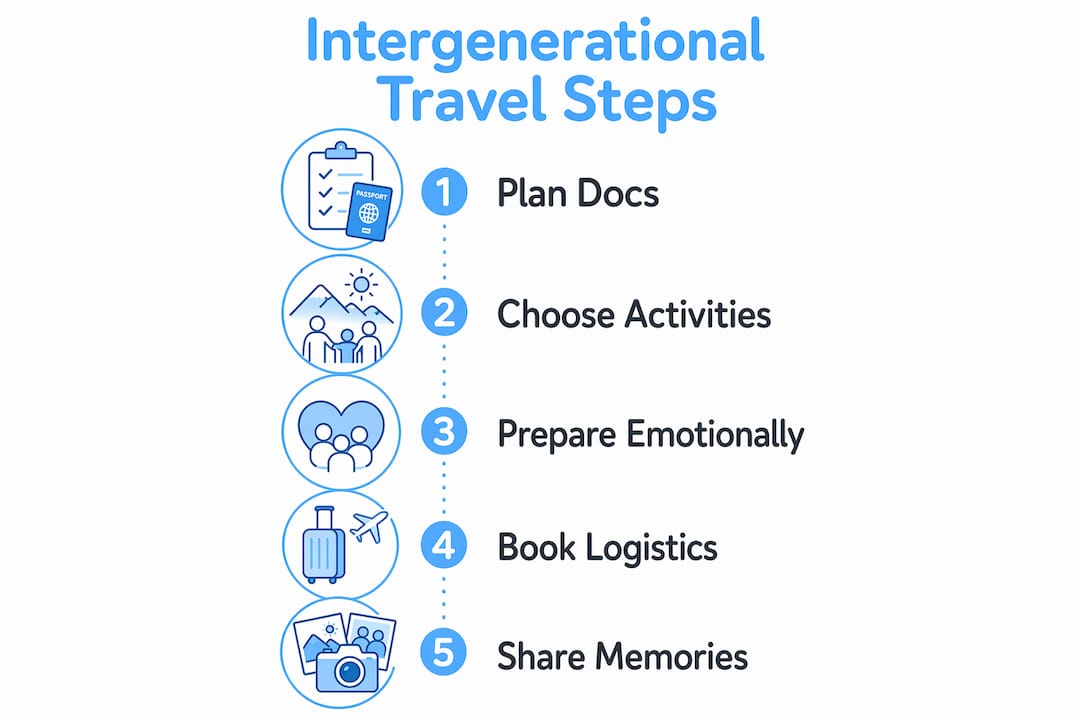
Intergenerational travel to Israel succeeds when documentation, pacing, emotional preparation, and activity selection are all planned together before departure.
Point | Details |
ETA-IL for every traveler | Every family member, including infants, needs individual ETA-IL approval before boarding. |
Assign a documentation lead | One adult tracking all travel documents prevents the most common boarding failure. |
Choose activities by age range | Sites like Nahal Me’arot and Katuptot programs serve all ages with accessible formats. |
Prepare children emotionally | Pre-trip storytelling and on-site reflection practices deepen engagement at historical sites. |
Time trips around events | Independence Day and major holidays unlock free access and family programming at top sites. |
Why this kind of trip changes families permanently
I have watched families arrive in Israel with the best intentions and still miss the point entirely. They rush through the Western Wall, skip the conversation, and move on to the next site. The families who leave transformed are the ones who slow down and let the place speak.
What I have learned from years of guiding multi-generational groups is that the most powerful moments are never the ones on the itinerary. They happen when a grandfather recognizes something in a museum exhibit that connects to a story he has never told. They happen when a ten-year-old asks a question that stops the whole group. You cannot manufacture those moments, but you can create the conditions for them.
The practical work matters enormously. Getting the ETA-IL right, pacing the days correctly, and preparing children before difficult sites all remove friction that would otherwise block those moments. But the real work is showing up with intention and giving every generation permission to experience Israel on their own terms.
Families who combine spiritual and cultural immersion with structured educational visits consistently report that the trip becomes a reference point in their family story for years afterward. That is the outcome worth planning for.
— Shay
Plan your intergenerational Israel trip with Bneimitzvahtrip
Bneimitzvahtrip has spent over 20 years designing Israel trips that work for the whole family, from the youngest child to the oldest grandparent. Every itinerary combines visits to meaningful historical sites, hands-on cultural experiences, and the kind of storytelling that makes heritage feel personal rather than academic. The team handles logistics, documentation guidance, and on-the-ground coordination so families can focus on being present. If you are ready to stop planning in circles and start building something your family will talk about for decades, explore the planned family tours at Bneimitzvahtrip and find the itinerary that fits your family’s story.
FAQ
What is intergenerational travel to Israel?
Intergenerational travel to Israel is a trip where multiple family generations, typically grandparents, parents, and children, travel together to share cultural, historical, and educational experiences rooted in Israeli heritage.
Does every family member need an ETA-IL for Israel?
Yes. Every traveler, including infants, must have an individual ETA-IL authorization before boarding. It costs 25 ILS and takes 24 to 72 hours to process.
What are the best family-friendly sites in Israel for all ages?
The Prehistoric Man Trail at Nahal Me’arot, the Western Galilee Katuptot program, and National Library of Israel cultural events are all designed for mixed-age groups with accessible formats and age-appropriate content.
How do I prepare my child for emotionally heavy sites in Israel?
Start with age-appropriate storytelling at home before the trip, explain each site briefly before entering, and give children time to reflect through drawing or journaling after each visit.
When is the best time to visit Israel for family cultural events?
Israel’s Independence Day offers free access to heritage sites with family programming. Major Jewish holidays including Passover and Sukkot also generate public cultural events suitable for all ages.
Recommended
Comments